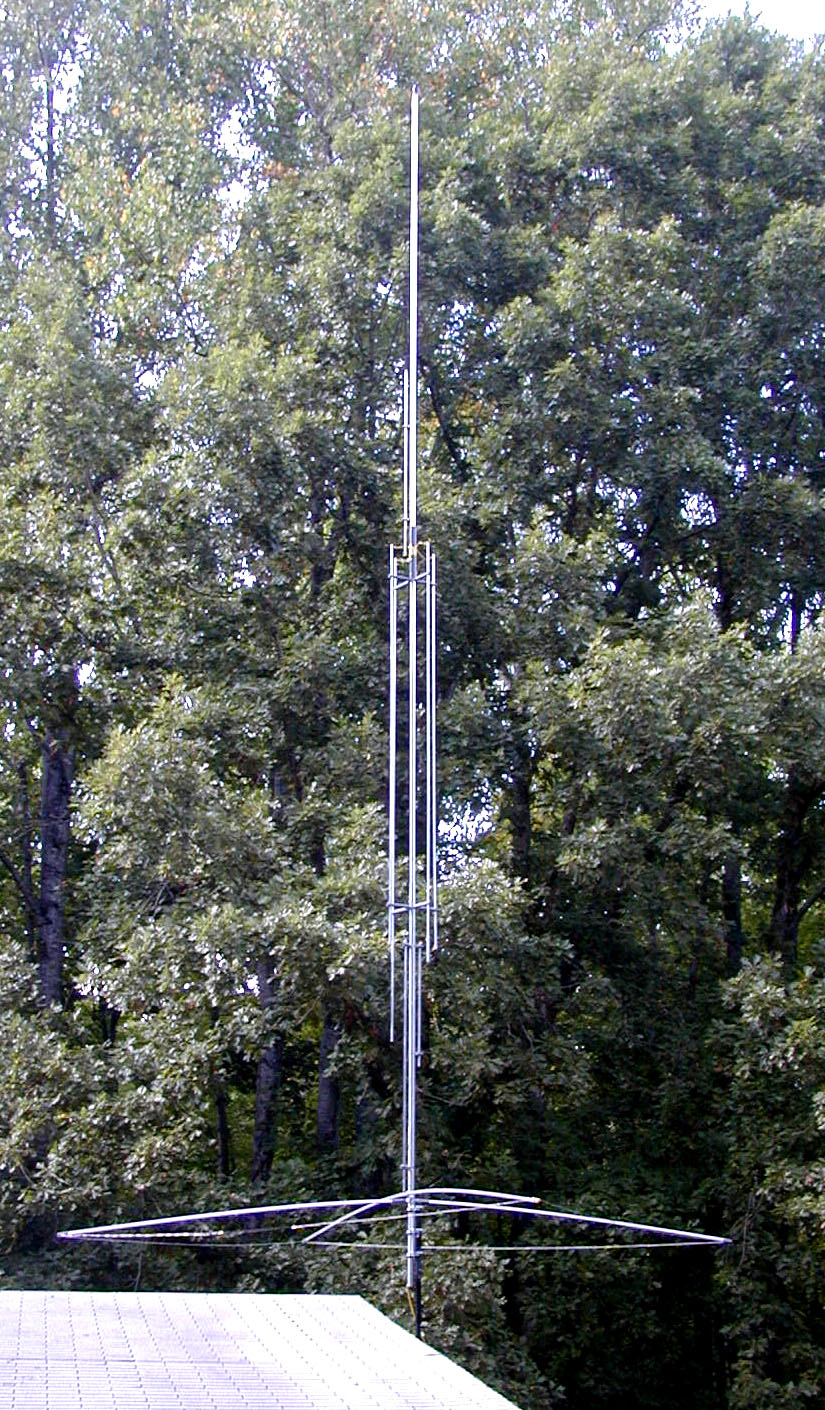
Fixed Vertical Monopoles
Overview
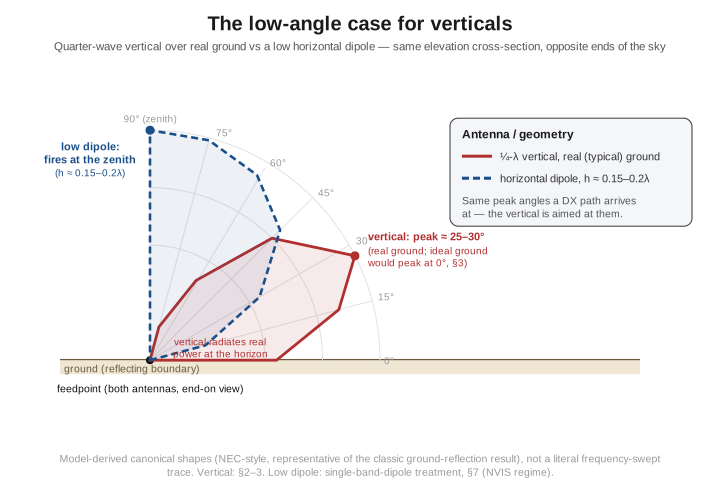
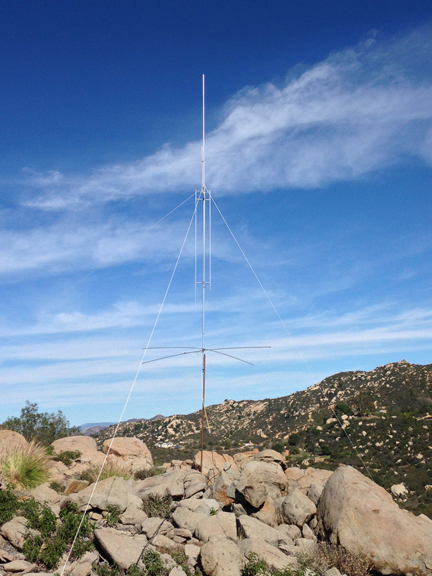
The quarter-wave vertical monopole over ground is the antenna for low-angle HF radiation — DX paths arrive at 5–20° elevation where a horizontal dipole at residential height has already peaked and rolled off. This dive covers the image-plane theory (monopole over perfect ground = half of a half-wave dipole, feedpoint ≈ 36 Ω), the omnidirectional azimuth pattern, and the radial field's role as load-bearing radiating structure that determines whether the antenna is a DX performer or a high-angle noise bucket. Full treatments cover quarter-wave ground-planes, full-size HF trap verticals (Hustler 4/5/6-BTV, Cushcraft R-9, GAP Titan DX), shortened loaded verticals (coil/cap-hat loading with efficiency penalty), and the half-square (6 dB more gain). DIY build is a 20 m elevated quarter-wave ground-plane; commercial buys are ranked by price tier.
Context
The fixed vertical's distinguishing advantage — low-angle radiation, 5.15 dBi in the upper hemisphere, omnidirectional in azimuth — comes at the price of the radial system: without a competent buried or elevated counterpoise field, a quarter-wave vertical loses 3–10 dB of efficiency to ground heating and becomes a high-angle noise-pickup antenna rather than a DX performer. With 60 buried radials over typical soil the loss drops to 0.5–1 dB; with 4 elevated radials it drops below 0.3 dB. This dive makes that tradeoff quantitative and separates the fixed-vertical problem (permanent radial system possible) from the portable-vertical problem (no radial system available), which lives in the companion Portable & Mobile Monopoles sub-project.