Portable & Mobile Monopoles
Overview
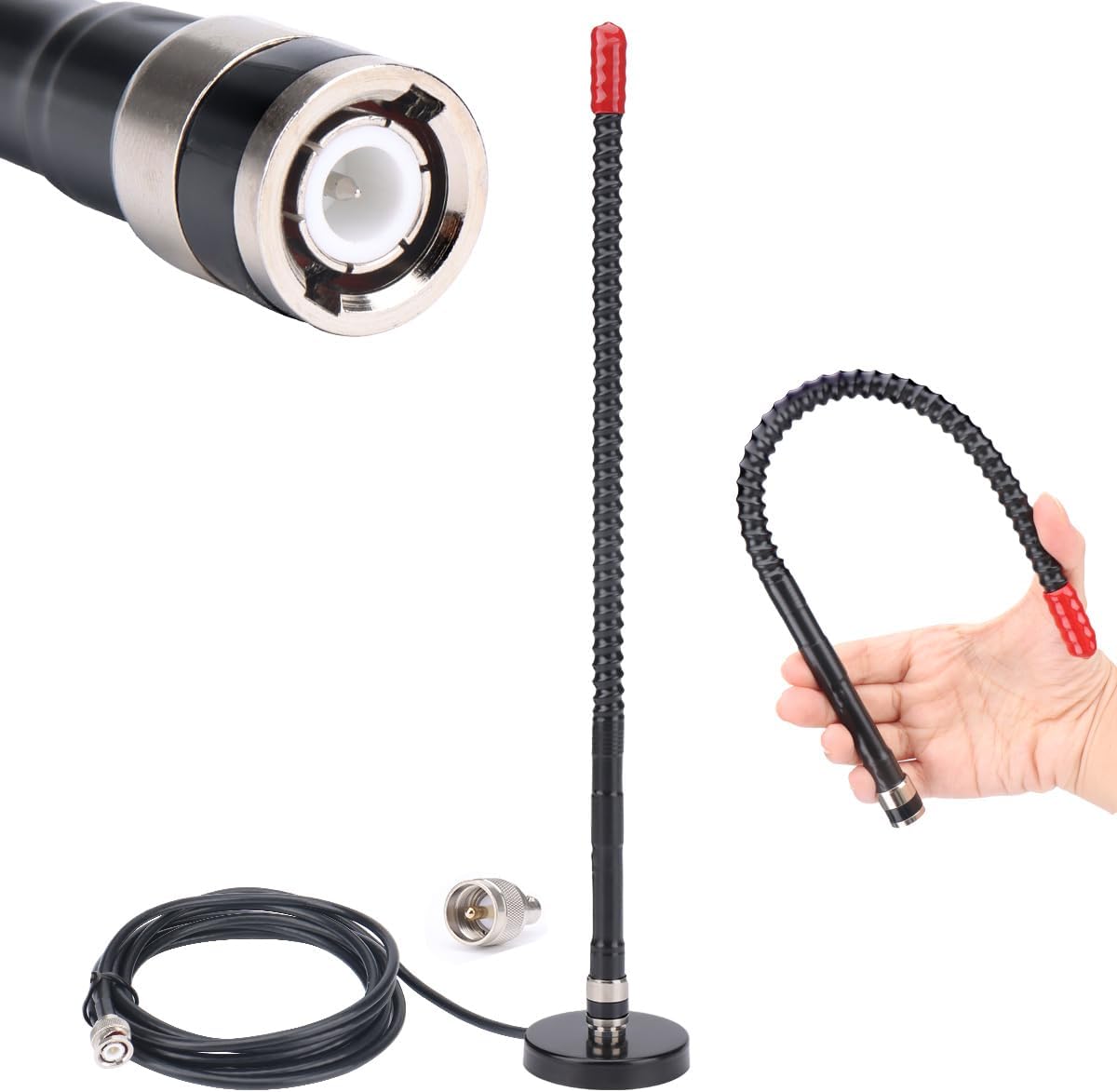
This dive covers every antenna worn by a handheld or vehicle-mobile radio in the Hack Tools hub: mag-mount and NMO whips for VHF/UHF vehicle installations, ham-sticks and mobile HF whips, backpack-portable HF antennas (MP-1, AX-1, Buddistick, Wolf River Coil), J-pole and Slim Jim for VHF/UHF deploy-and-go, rubber ducks and helical stubs, and telescoping whips for SDR receive. The DIY build is a 2 m roll-up J-pole — the canonical $15 backpack VHF antenna that outperforms every $40 commercial high-gain rubber duck. Every entry documents its compromise explicitly: the operator's body as counterpoise, the Chu-Harrington size/efficiency tradeoff, and the efficiency penalty table from 80 m (5–10%) through 2 m (90%+).
Context
The factory-shipped rubber duck is a 30-year-old compromise designed for size and drop tolerance — not radio performance. A $25 upgrade antenna on a handheld typically buys 6–12 dB of SNR improvement, more than the next $300 of receiver-upgrade money can deliver. The structural difference from fixed verticals is the counterpoise: portable verticals use the operator's body (handheld counterpoise problem), the vehicle roof (the closest thing to a perfect ground at VHF/UHF), or nothing at all — and every entry in this dive has that tradeoff documented in its performance envelope. Below 14 MHz, every portable antenna is a serious compromise driven by the Chu-Harrington limit; above 20 MHz, full-size whips become mechanically practical.