Receive-Only Loops & Specialty Receive Antennas
Overview
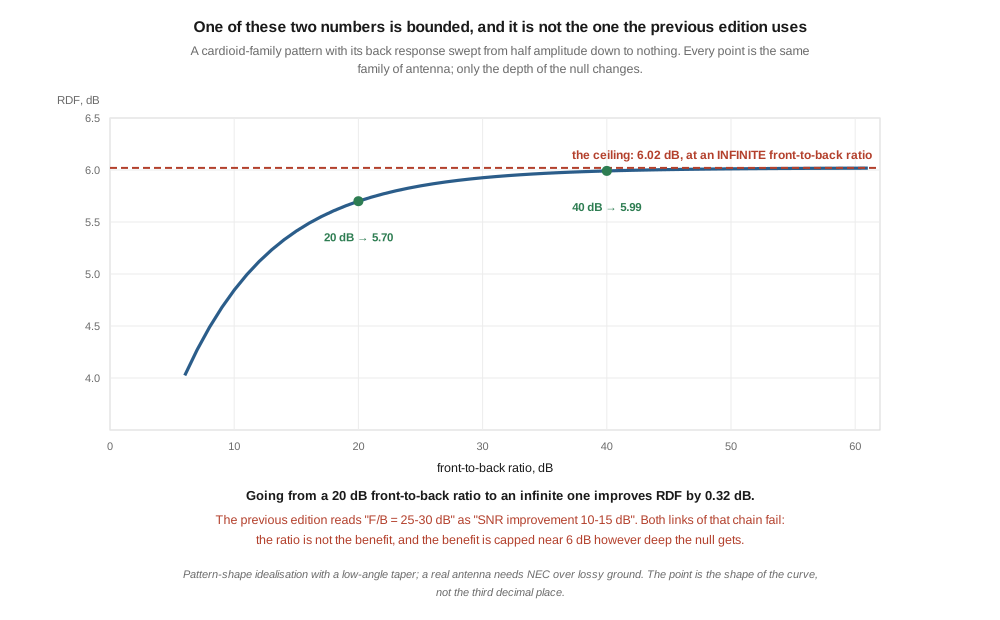
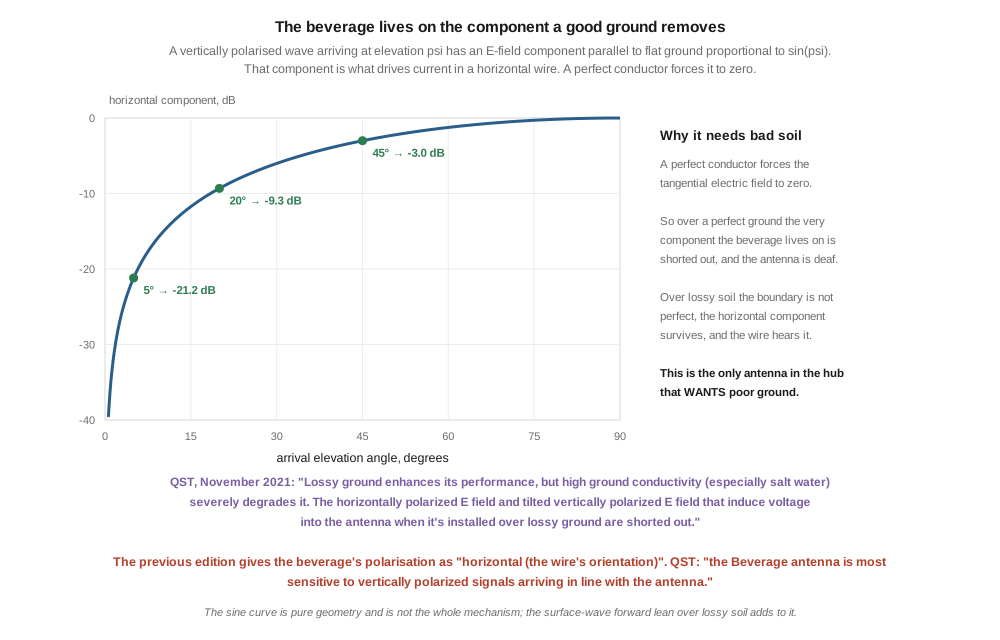
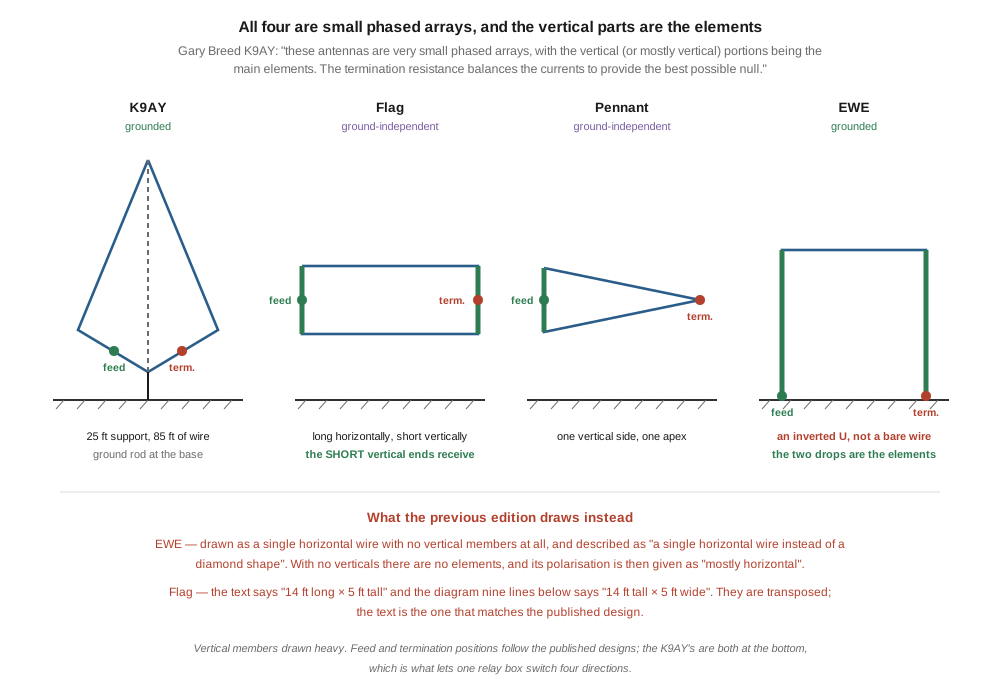
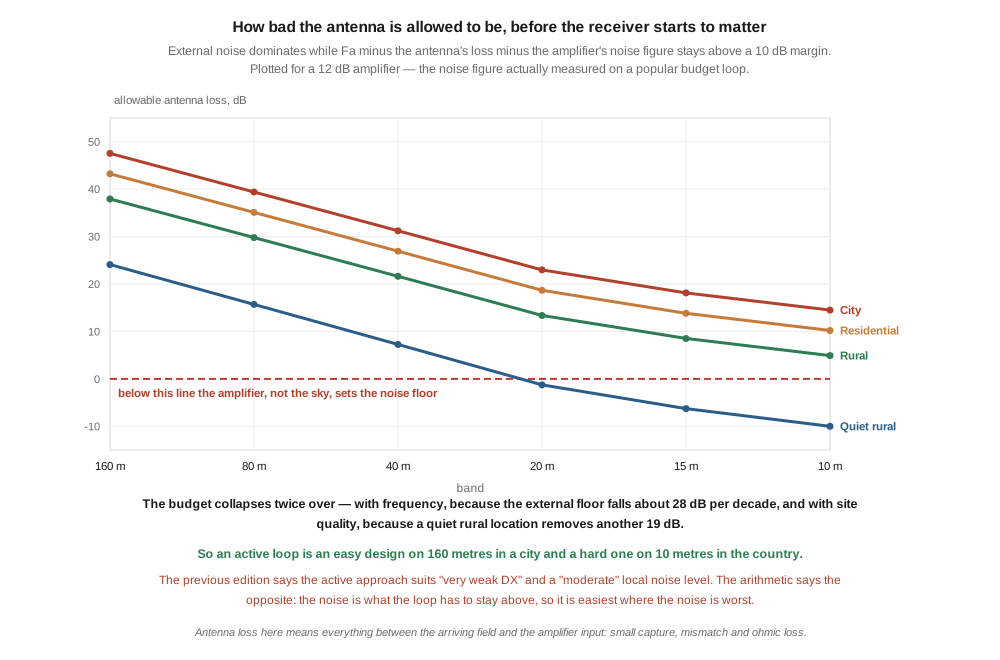
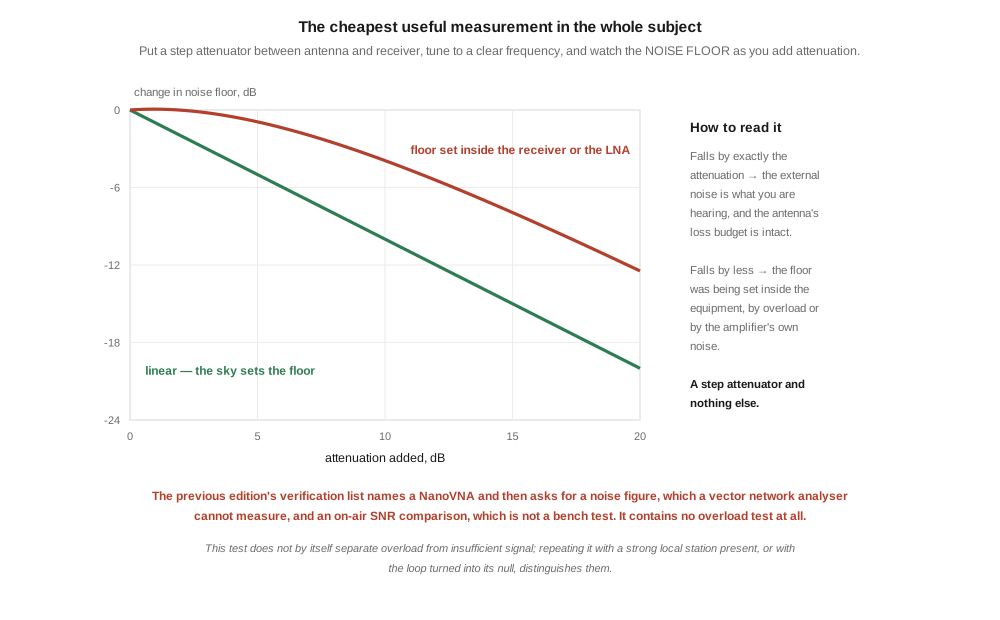
Receive-optimized antennas are intentionally lossy because the loss is the noise rejection: on HF below ~14 MHz, external atmospheric and man-made noise dominates the noise floor by 20+ dB, and a directional receive antenna improves SNR by rejecting off-axis noise even as it reduces absolute signal level. This dive covers six families: the beverage (long terminated wire, 20–25 dB F/B, the king of low-band receive), the K9AY loop (small-lot terminated diamond, directional null), flag and pennant terminated loops (most compact directional receive antennas), the EWE (truncated beverage with 9:1 transformer), ferrite-rod loopsticks, and active receive loops (Wellbrook ALA1530, LZ1AQ, Bonito MegaLoop — 0.5–1 m diameter plus integrated LNA). DIY build is a Wellbrook-style 1 m active loop. Phased arrays of receive antennas are covered with cross-reference to the antenna-farms synthesis volume.
Context
The central insight is that on the lower HF bands, external noise dominates and a more "sensitive" antenna (higher gain, broader pattern) picks up more noise, drowning the wanted signal — the opposite of the intuitive upgrade path. A directional receive antenna improves SNR by rejecting off-axis noise, even at the cost of absolute gain. This dive closes the wire-and-air cluster and leads directly into the matching-network cluster; every receive antenna here terminates into an LNA or a transformer, and the active-loop preamp design cross-links heavily to the Active Splitters sub-project's MMIC LNA section and noise-figure budgeting.