Spectrum Analyzers
Overview
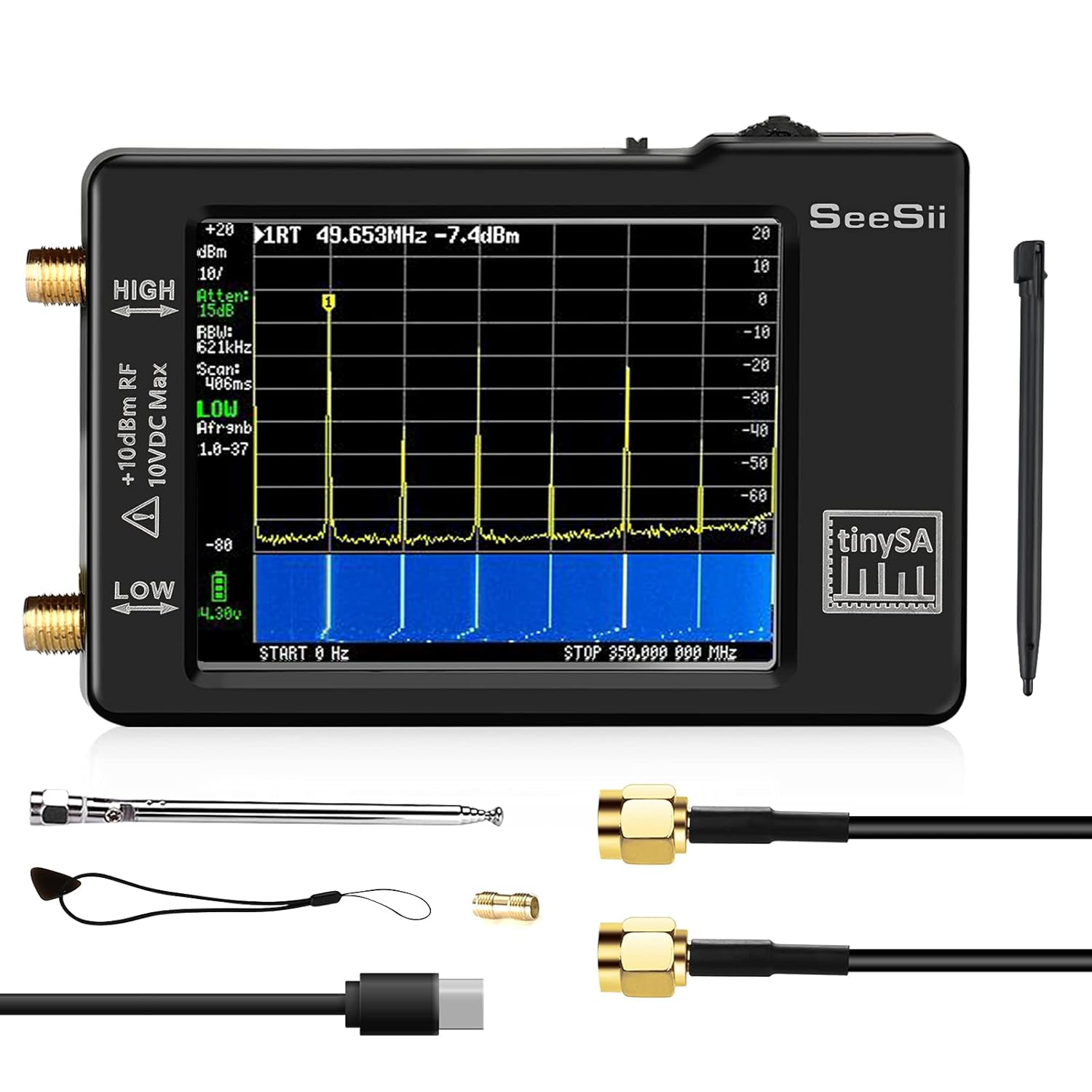
The spectrum analyzer answers "what's at this frequency, and how much of it is there?" — the calibrated absolute-power-vs-frequency measurement that neither a VNA nor an SDR provides cleanly. This dive covers the full instrument hierarchy: the TinySA pocket analyzer (HF input to 350 MHz output), TinySA Ultra (to 5.3 GHz with built-in tracking generator), Tektronix RSA306/RSA607 real-time USB analyzers, Signal Hound BB60C and SM200B, R&S FSH4/FSH8 professional handhelds, and the legacy HP/Agilent benchtop market. Workflows treated at depth include SWR sweep via tracking generator + directional coupler, transmitter harmonic and spur characterization through an antenna, EIRP estimation by antenna reciprocity, near-field E-field and H-field probing, and pre-selector / front-end filter selection for protecting the SA front end from strong local signals.
Context
The spectrum analyzer sits alongside the NanoVNA and the power/SWR bench as the third leg of the measurement toolkit — each instrument exists because the other two cannot cleanly do its job. The SA's core capability is calibrated absolute power across the full RF band without per-frequency calibration data; it cannot give phase information or impedance. TinySA and TinySA Ultra democratized SA access the same way the NanoVNA democratized VNA access, placing a calibrated spectrum display in the pocket-tool price range ($50–170). Resolution bandwidth (RBW), video bandwidth (VBW), sweep speed, input attenuator, and detector mode are the five operator-controlled variables that determine whether a displayed power reading is valid or off by tens of dB.