Yagi-Uda Antennas
Overview
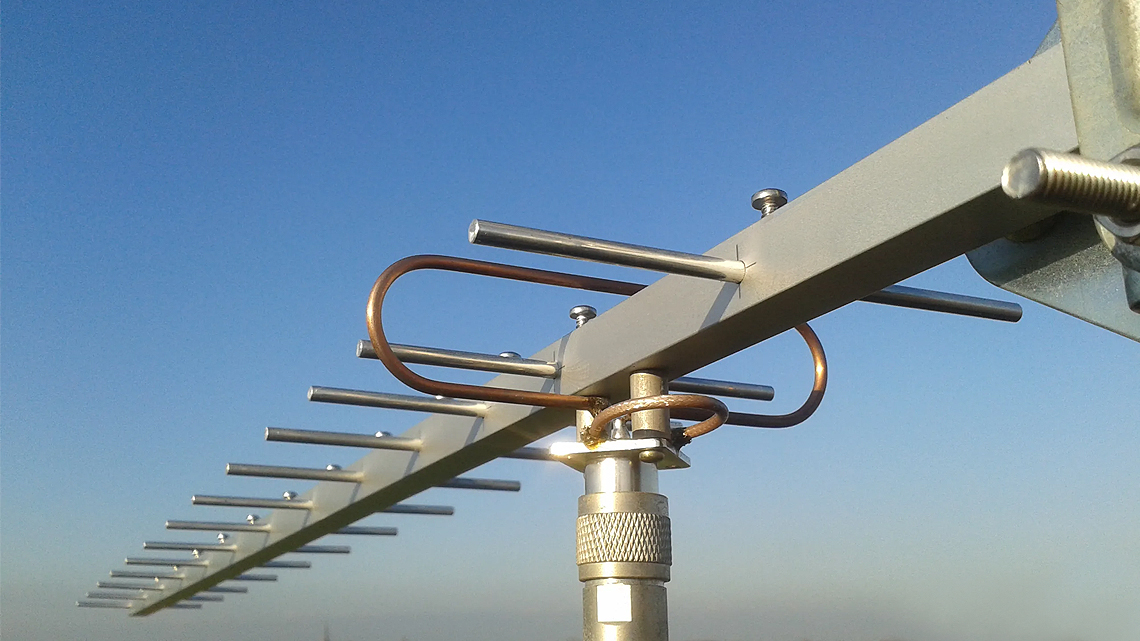
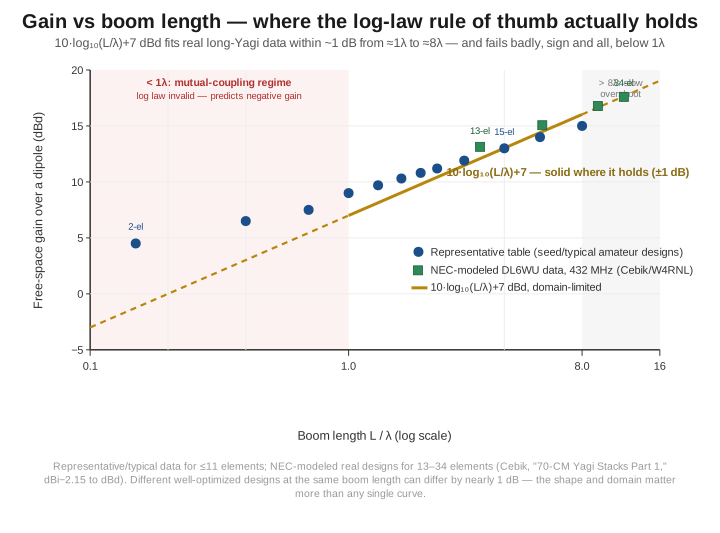
The Yagi-Uda is the antenna to build when you know which direction you want gain. The 1926 Yagi-Uda parasitic-array principle produces 5–15 dBi of forward gain and 15–35 dB of front-to-back ratio from a small number of closely-spaced half-wave elements — a performance ratio that has dominated directional VHF/UHF work for a century. This dive covers the parasitic-element principle (driven element + reflector + directors), the boom-length-vs-gain diminishing-returns curve, feedpoint impedance and the matching options (direct, gamma, hairpin, T-match, LFA loop), single-band vs LFA vs OWA topologies, and the DIY build (a 5-element 2 m Yagi from EME-class plans). Commercial buys cover every price tier from M2 to Directive Systems.
Context
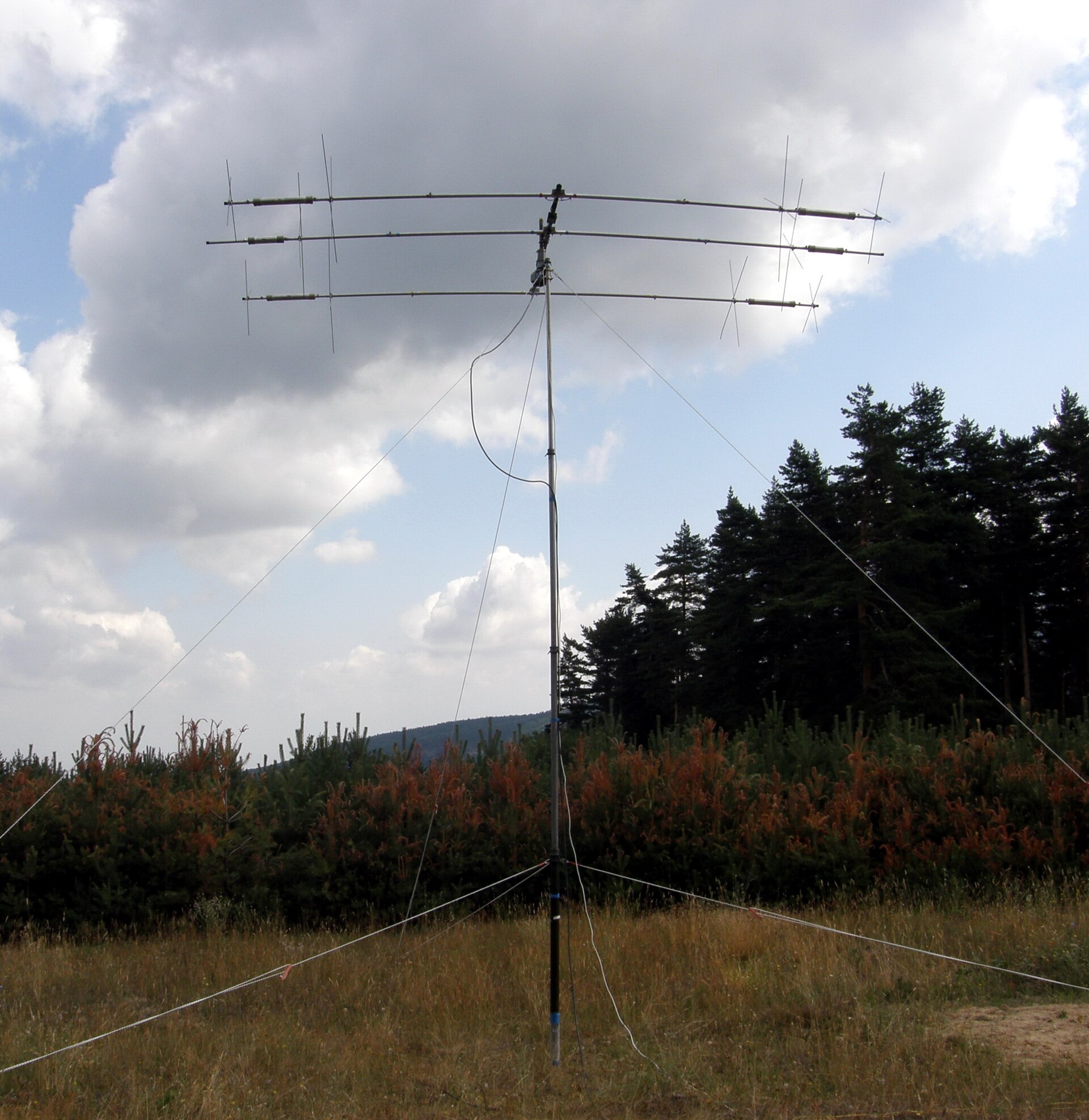
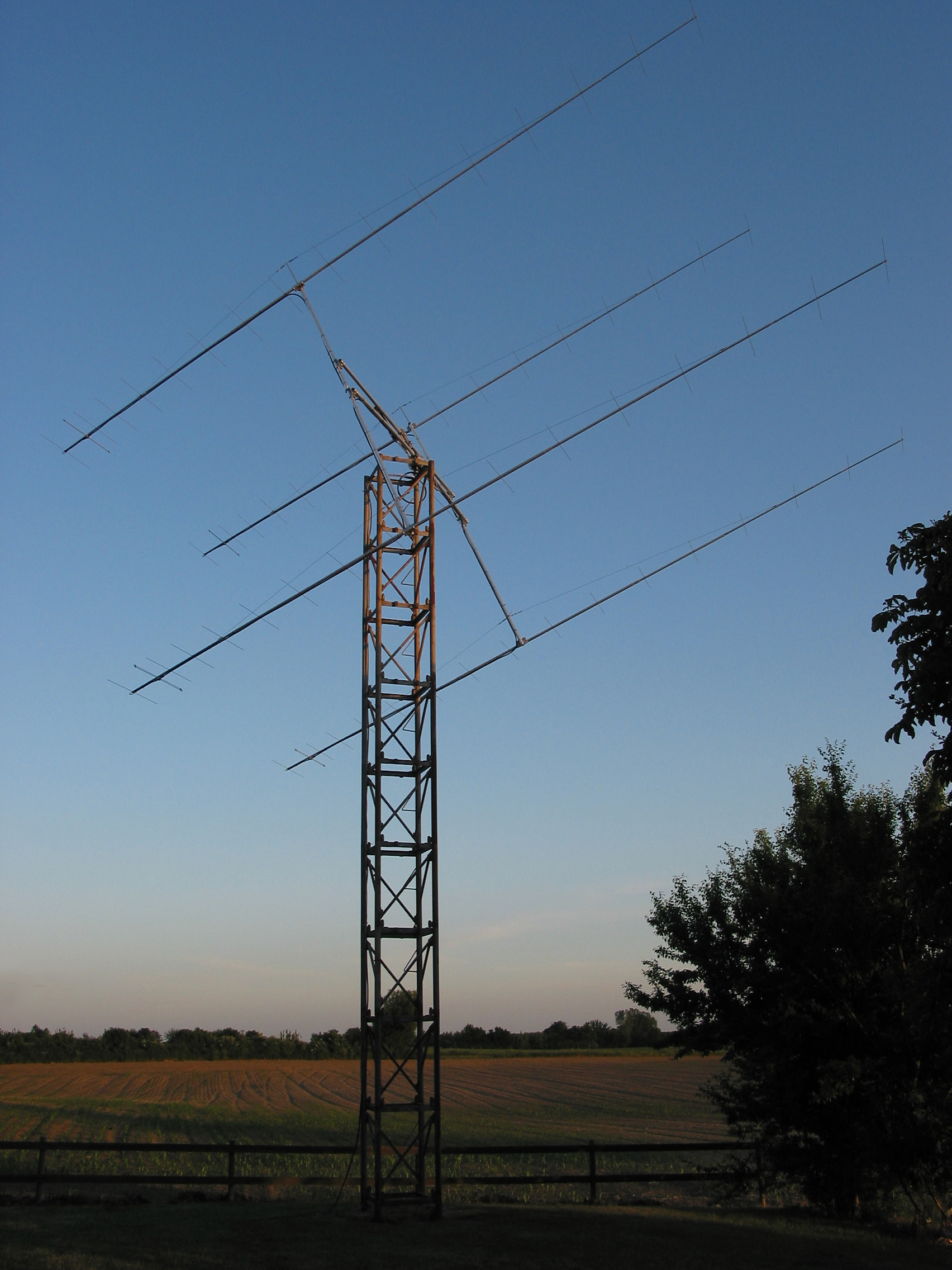
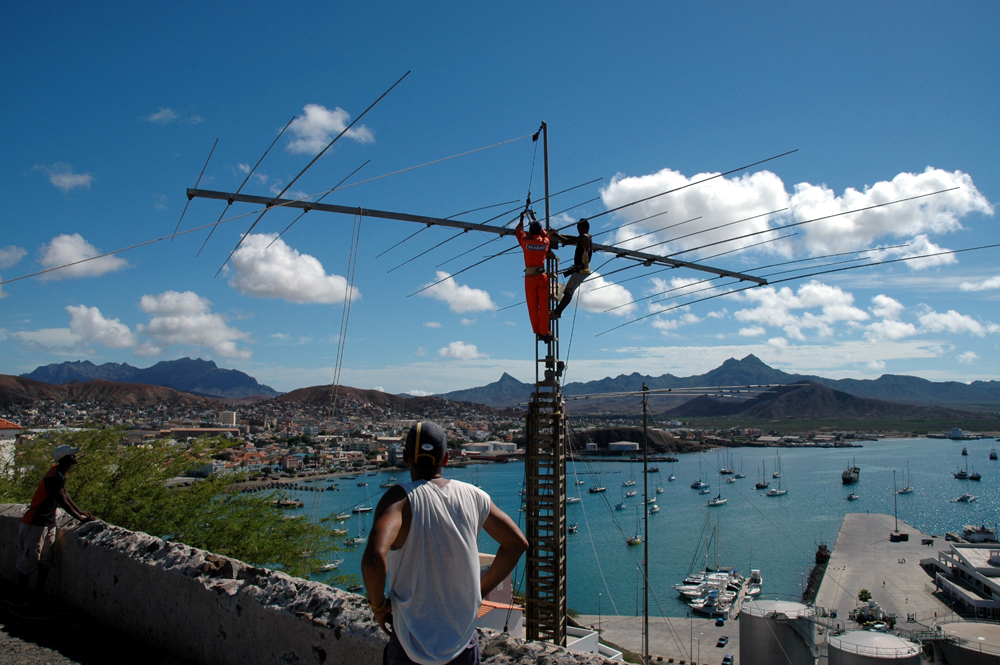
Every TV antenna on every rooftop is a Yagi; every 2 m repeater beam, every 2.4 GHz Wi-Fi kilometer-link, every EME station stack is Yagis. The design space has been worked over by 60+ years of NEC modeling, and the element spacings for maximum-gain and maximum-F/B Yagis of any boom length are well-tabulated — what remains for the operator is picking the right topology (single-band high-gain, LFA loop-driven for low SWR, OWA for wideband) and installing it cleanly. The Yagi vs LPDA decision is the key design choice: a Yagi gives higher gain at one frequency on a given boom; an LPDA gives moderate gain across a 4:1 frequency range on the same boom.