BALUNs & UNUNs
Overview
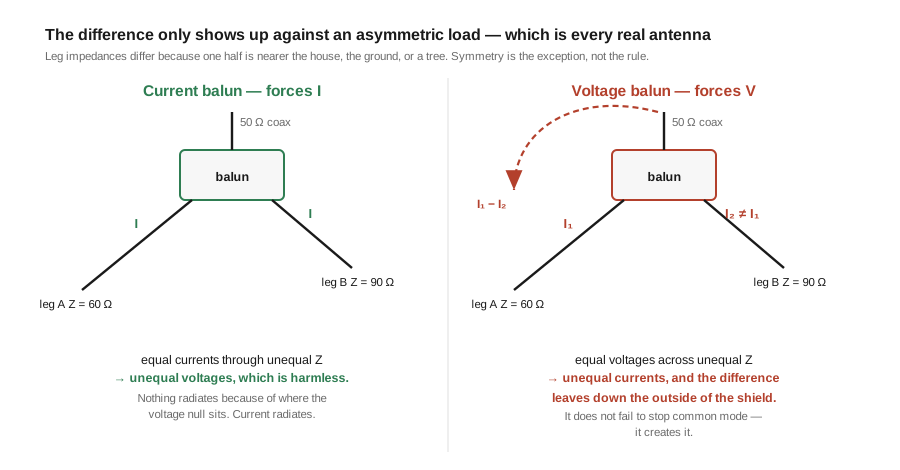
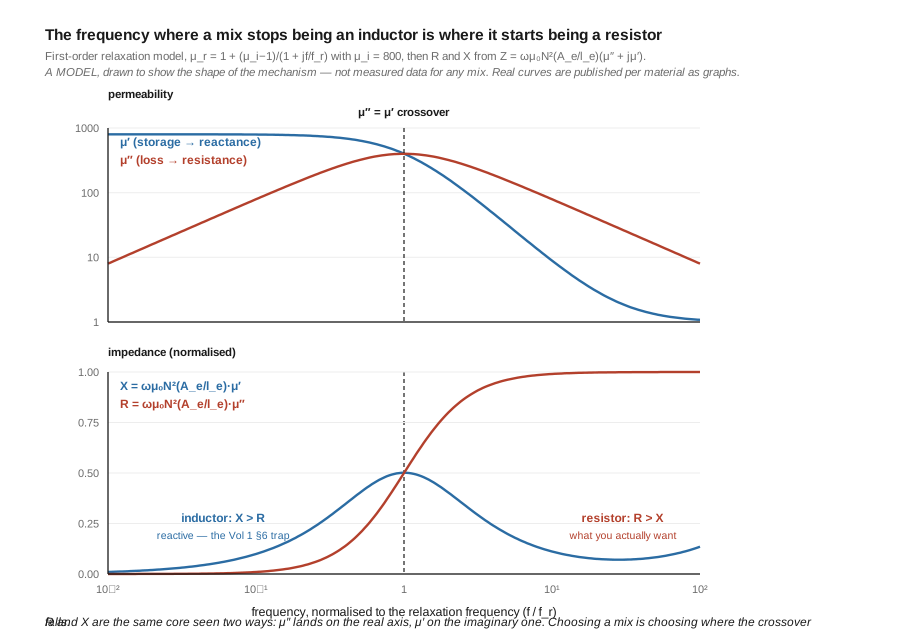
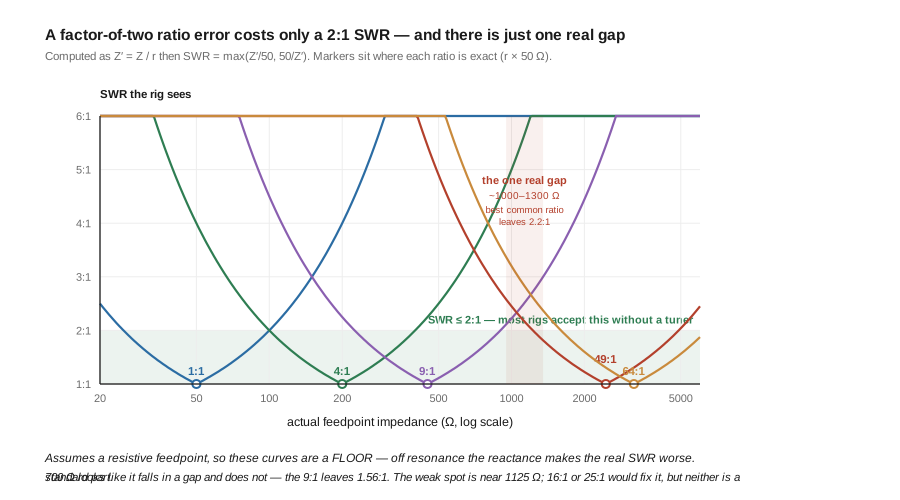
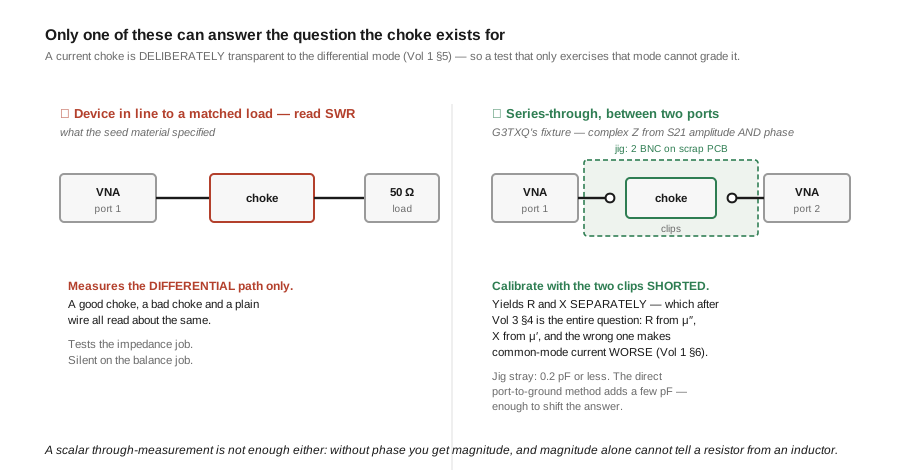
Every antenna feedpoint needs something between its natural impedance and the 50 Ω unbalanced coax feeding the rig — either a BALUN (balanced-to-unbalanced, for center-fed dipoles and doublets) or a UNUN (unbalanced-to-unbalanced, for end-fed wire antennas). This dive covers the full ferrite-core family: current vs voltage BALUN topology, transmission-line vs autotransformer construction, the five canonical ratios (1:1 / 4:1 / 9:1 / 49:1 / 64:1), ferrite mix selection (mix 43 / 31 / 61 / 52 / 67 — band coverage, permeability, temperature stability), bifilar/trifilar/quadrifilar winding methods, power handling and core saturation, and common-mode choke (line isolator) recipes for every feedline scenario. Step-by-step DIY winding guides use standardized cores (FT240-43, FT240-31, FT140-43); commercial buys cover Balun Designs, DX Engineering, and MFJ. NanoVNA-based testing of finished assemblies closes the dive.
Context
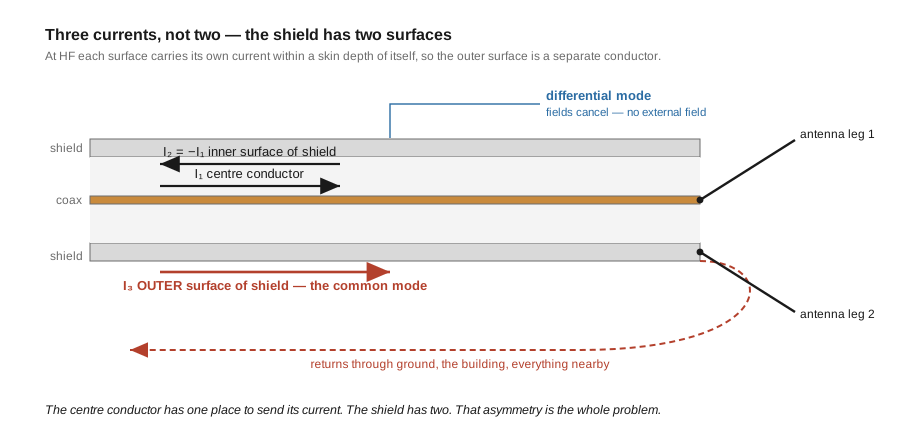
This is the most cross-linked-into sub-project in the series: every antenna in the wire-and-air cluster ends at a feedpoint that references here, and the 49:1 UNUN is the load-bearing component in every EFHW installation. The practical payoff of DIY winding is cost — roughly one-third the price of commercial BALUNs at similar performance — using a small library of standardized cores the operator buys once and matches to each new antenna. The current-vs-voltage BALUN distinction is the most-misunderstood topic in HF antenna feeding; this dive resolves it with first-principles derivation before giving the winding recipes.