Discone & Wideband Antennas
Overview
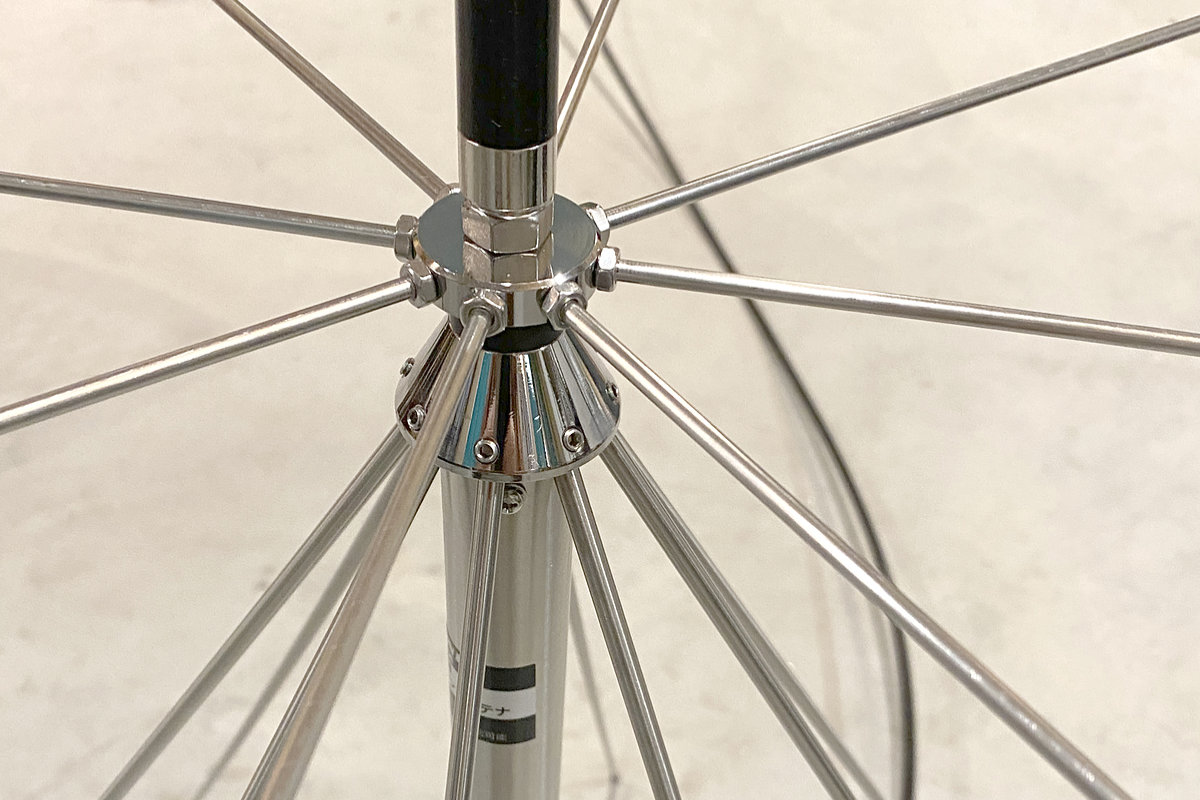
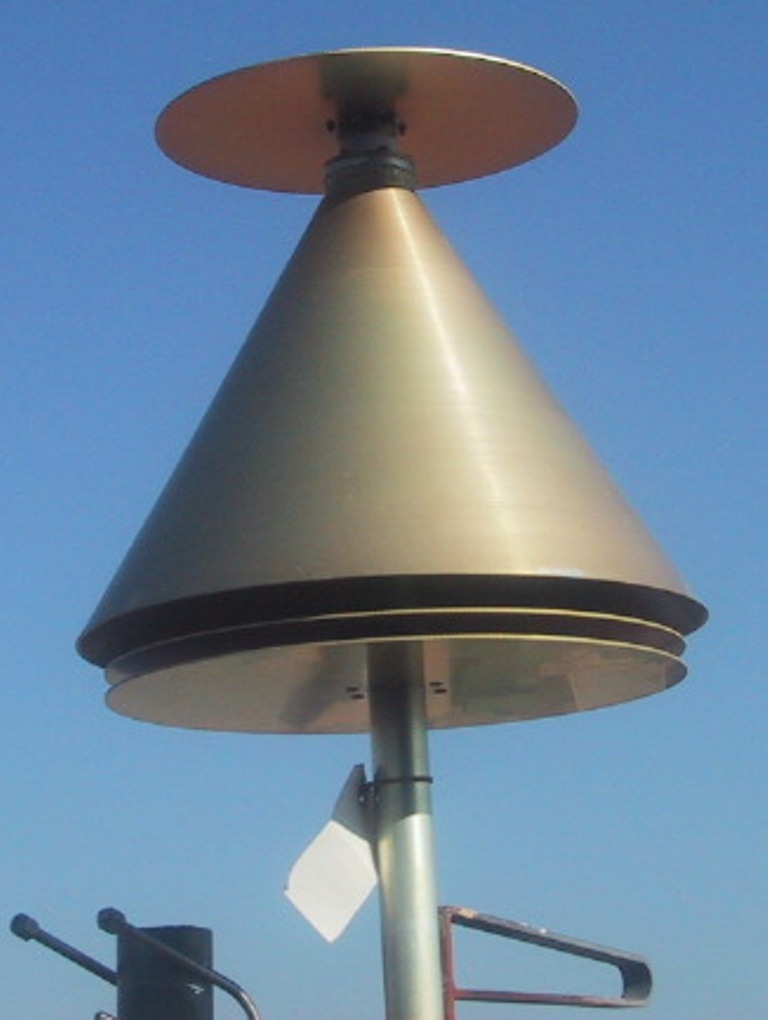
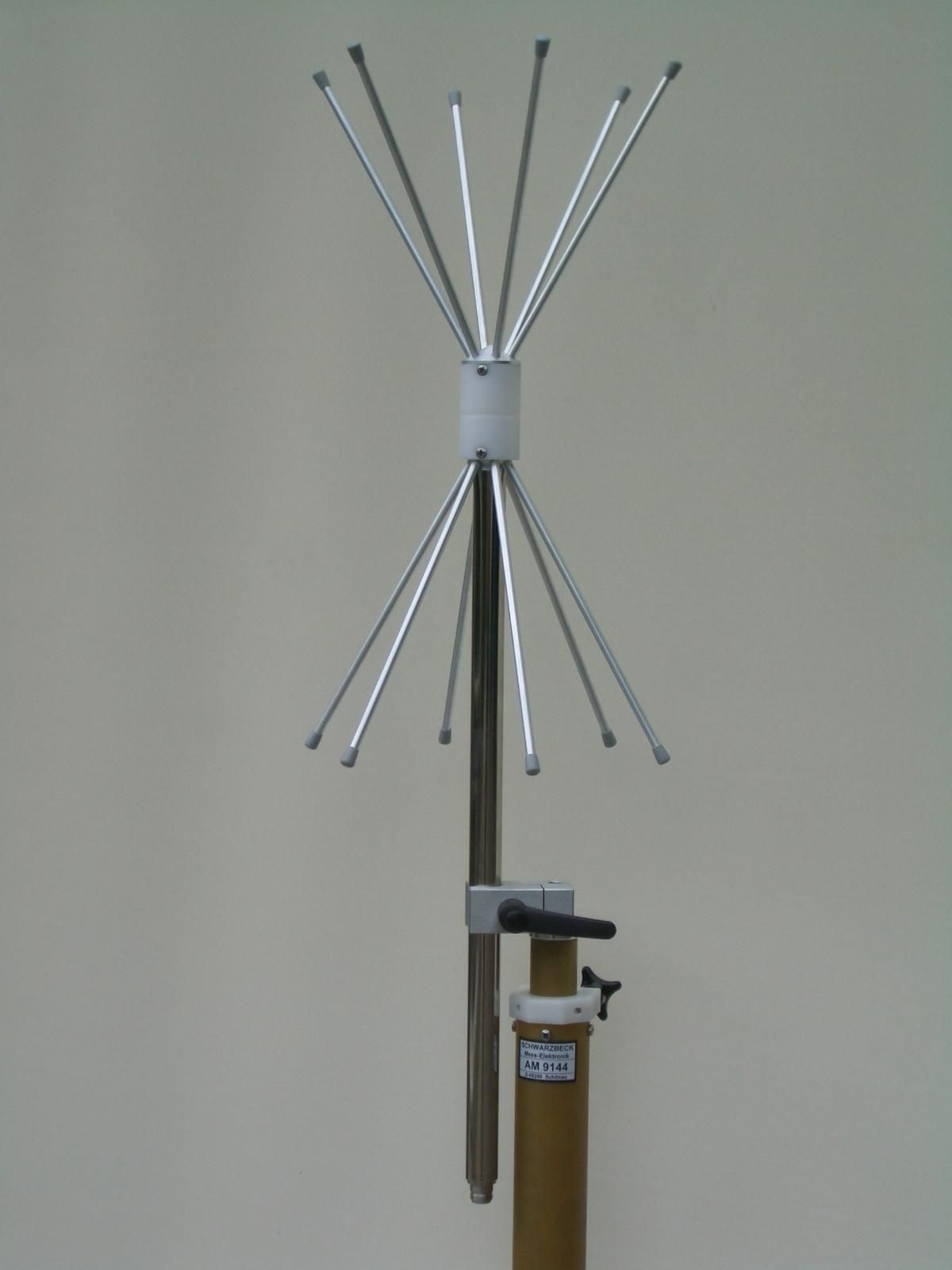
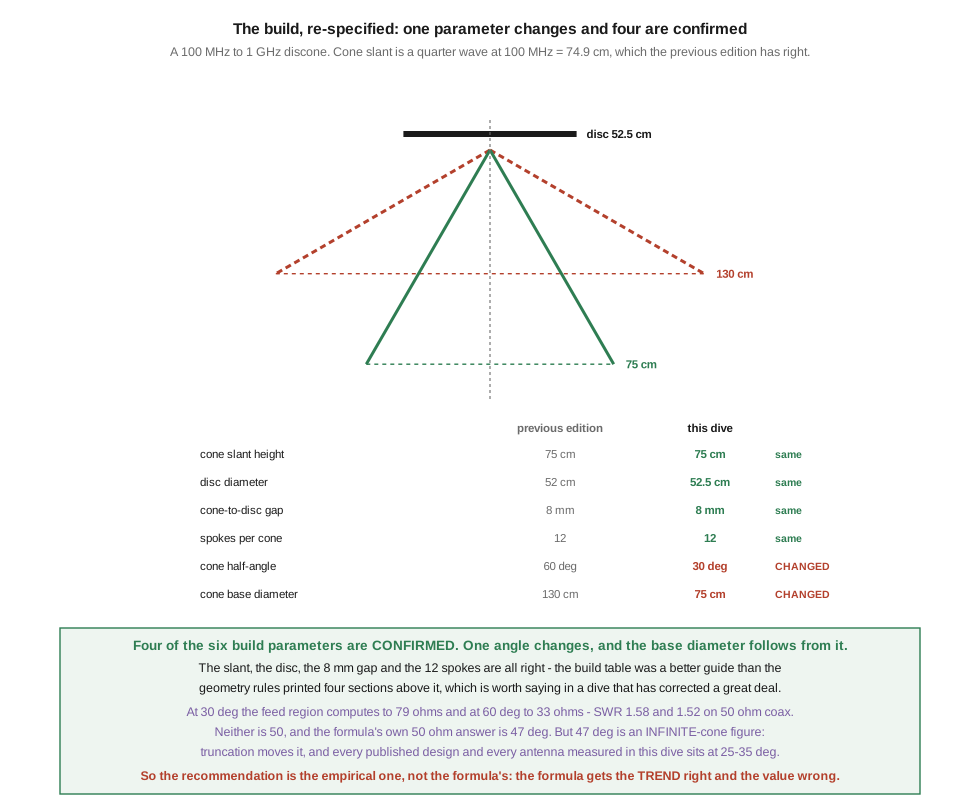
The discone is the canonical wideband scanner/receive antenna — a cone over a disc whose impedance-derived geometry achieves a 10:1 frequency range (e.g. 100 MHz – 1 GHz) at SWR < 2:1 by the Rumsey frequency-independence principle. This dive covers the discone proper (Kandoian's original geometry), the sleeve-antenna variant, the biconical and conical monopole EMC-test forms, feedpoint impedance and matching, the omnidirectional azimuth pattern with its characteristic low-angle null, and the DIY build (a 100 MHz – 1 GHz discone from sheet aluminum). Commercial buys include the Diamond D130J/D3000N and Sirio SPT-270; use cases span HackRF, RTL-SDR, Flipper Zero sub-GHz, public-safety scanning, NOAA weather at 137 MHz, and amateur VHF/UHF monitoring on one feedline.
Context
One feedline, all listening — that is the discone's value proposition, and it explains why every scanner sold for 40 years has been packaged with a discone or its sleeve-antenna miniature. The discone's omnidirectional coverage handles all cases where the signal direction is unknown; the companion Log-Periodic & Structured Wideband sub-project handles the directional wideband case. The dividing principle is Rumsey's 1957 frequency-independence theorem: any antenna whose geometry is defined entirely by angles (no characteristic length) is theoretically bandwidth-unlimited, with practical limits set by the antenna's physical extent at the low end and fabrication coarseness at the high end.