Multi-Band Dipoles
Overview
This dive catalogs the six dominant multi-band wire-antenna solutions: the off-center-fed dipole (OCFD / Carolina Windom), fan dipole, trap dipole, doublet with open-wire feed, G5RV and ZS6BKW, linked dipole, and the wide-bandwidth cage dipole. Each variant receives a treatment of how it achieves multi-band operation, what it costs in efficiency or operating convenience, where it wins, and where it falls down — from the "no tuner needed" Buckmaster-style OCFD covering 80/40/20/17/15/12/10/6 m to the "balanced ladder line into a tuner" doublet. The DIY build is a Buckmaster-style OCFD with a 4:1 BALUN and a 135 ft wire, the highest-utility-per-dollar multi-band wire antenna for a typical residential installation.
Context
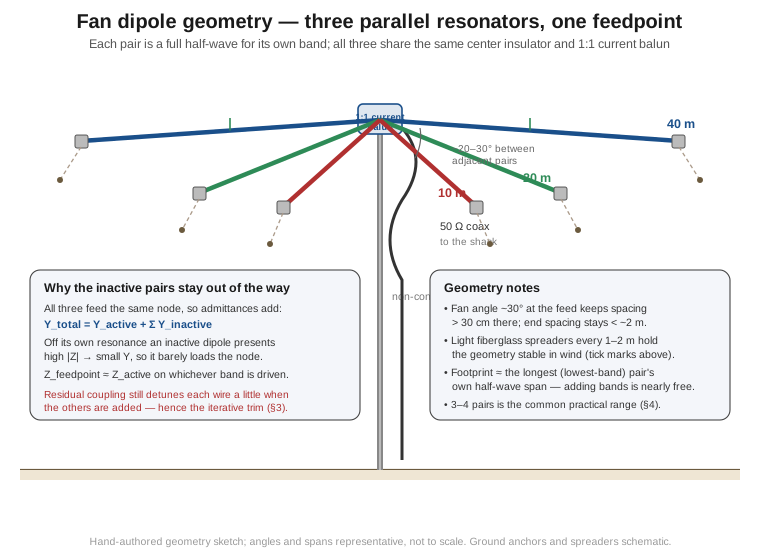
Real operators want more than one band from a single wire, and the multi-band dipole family solves this by making different structural trades: OCFD shifts the feedpoint off-center to find harmonic impedances; fan dipole puts parallel resonators on one feedpoint; trap dipole uses LC tanks as frequency-selective insulators; the doublet feeds a long wire through balanced ladder line into a tuner. This dive is the natural sequel to Single-Band Dipoles, which established the clean reference geometry; multi-band versions are dipoles in spirit but reshaped enough by the multi-band problem — impedance at harmonics, element interaction, BALUN heating — that mixing the treatments in one volume would muddy both.